Lawn Restoration — Manitowoc, WI
Stop wasting money on lawn treatments that don't work.
The ONLY Lawn RestorationThat Fixes the Root Cause
Your lawn isn't the problem. The companies treating it are. They skip dethatching because it takes more work, but it's the one step that actually lets nutrients reach the soil. We don't skip it. That's why ours last.
- Ranked #1 in Manitowoc — 5+ years in business
- The only company in Manitowoc that dethatches before restoration
- Lawn restoration warranty — if any part fails, we fix it free
- Locally owned and operated — not a franchise
- Our own unique 8-Step "Fast Grass Root Restoration Method"
"Spent three years with TruGreen and my lawn kept getting worse every season. Fast Grass came out, told me exactly what was wrong, and six weeks later it looks better than it ever has. Can't believe nobody told me about the thatch thing before."
— Mike H., Manitowoc homeowner


The Real Problem
You've Spent Good Money on Your Lawn. So Why Does It Keep Getting Worse?
You followed the plan. You hired the professionals. You paid for the treatments. You watered when they told you to water. And every spring, you walk outside hoping this is the year it finally comes back. It isn't. If anything, it's thinner than last year.
- Bare patches that never fill in, no matter what you put on them
- Tried seeding the dead spots yourself — nothing grew
- Spending hundreds every year on treatments that make it look okay for a few weeks, then right back
- Companies out to "inspect for grubs" or "treat for insects" — lawn still looks the same
- Starting to wonder if your soil just can't grow grass
The frustrating part?
This isn't a money problem.
It's not an effort problem.
And it's definitely not your lawn.
It's because the treatments you've been paying for were never going to fix the problem. There's something happening underneath your lawn that nobody has told you about …
See How It Works →The Diagnosis
The Real Reason Your Lawn Keeps Dying Isn't What You Think
Most homeowners think they know what's wrong:
- "I've got a grub problem"
- "I need an insect inspection"
- "My soil is just bad"
- "I need stronger chemicals"
- "I need to overseed again"
Almost every time, they're wrong. Not because they're not smart. But because nobody ever told them what's actually going on beneath the surface.
Your Lawn Isn't Dying From the Top Down. It's Dying From the Bottom Up.
There's a layer sitting just beneath the surface of your lawn — dead grass, old roots, compacted debris — called thatch. Picture your lawn like a body that needs nutrients delivered directly to it. Now picture wrapping that body in cling film. That's thatch. Everything you put on top — fertilizer, water, grass seed — sits on that layer and goes nowhere.
What thatch blocks:
- Fertilizer can't get through it
- Water sits on top instead of reaching the roots
- Grass seed can't make contact with actual soil
- Nutrients never reach the zone where your grass actually grows
That's not a bug problem. That's not a soil problem. That's a thatch problem.
Get My Free Quote →The Industry
Every Other Lawn Company in Manitowoc Knows About Thatch. They Just Don't Remove It.
Dethatching takes time. It takes equipment. It takes effort. So most companies skip it. Not because they don't know it's the problem. Because fixing it properly cuts into their margins — and more importantly, it cuts into their recurring revenue.
National Franchises
- Apply chemicals for short-term green-up → fades
- Aerate but leave thatch sitting there
- Book you for the next visit
Big Local Outfits
- Treat for insects when the real problem is thatch
- Lawn gets thinner every year
- They keep cashing your checks
DIY Products
- Applied on top of the thatch barrier
- Never reaches the soil
- Looks okay for a few weeks, then back to nothing
TruGreen. The national franchises. The big local outfits with twenty trucks on the road. Not one of them dethatches.
Not because they can't.
Because a lawn that's actually fixed doesn't need them.
The Business Model
The Lawn Care Industry Is Built on You Never Getting Better.
That's not an accident. That's the business model.
- Apply chemicals for short-term green-up → fades → call them back
- Aerate — but leave the thatch, so nothing penetrates
- Treat for insects/grubs — when the real problem is thatch
- Lawn gets thinner. Every single year.
- They keep cashing your checks.
The longer you stay on the treadmill, the harder your lawn becomes to fix.
Those repeated chemical applications actually strip your soil of phosphorus and potassium — the nutrients your grass needs most to sustain itself.
You've Been Paying for the Illusion of a Healthy Lawn.
And it's exactly why we do things differently.
The Fix
Here's What Actually Has to Happen to Fix Your Lawn — For Good
Picture your lawn like a human body that needs nutrients delivered directly to where it grows. Now picture wrapping that body in cling film. That's thatch. Every fertilizer you've applied, every bag of grass seed you've put down — it's been landing on that layer and going nowhere.
Here's Why Aeration Alone Doesn't Fix It.
Aeration punches small holes through the thatch layer. That's it. The thatch is still there. Water still can't penetrate properly. Seed still can't reach soil. Fertilizer still hits the mat. It's like poking a few holes in cling film and calling it fixed.
Think of it this way:
- Chemicals and fertilizer = supplements. They work when the body is already healthy. Put them on a thatch-blocked lawn and they do nothing.
- Dethatching = the proper diet. The foundation that has to come first. Without it, nothing else works.
It's just the one step the entire lawn care industry refuses to take.
The Method
The Fast Grass Root Restoration Method
The only complete lawn restoration system in Manitowoc that fixes the actual problem.
Dethatch
This is the step every other company skips. Dethatching isn't spraying something and moving on. It's physical, methodical work — pass by pass across your entire lawn — pulling the compacted layer of old grass, dead roots, and debris out completely. Not loosened. Not worked around. Removed. Every corner. Every edge. No shortcuts. It takes time. That's exactly why the big companies don't do it.
Surface Preparation
Once the thatch is gone, we manually grade and level the soil surface across the entire lawn. A properly levelled surface is what allows seed to settle into direct contact with soil.
Old Lawn Removal
Everything that's dead, dying, or beyond saving gets pulled out completely. Clean surface. Fresh start.
Plug Aeration
With the thatch barrier gone, aeration finally does what it's always supposed to do. We core aerate the entire surface — open channels running directly down to the root zone.
Fertilizer Application
With open channels running straight to the root zone, we apply fertilizer directly into prepared soil — not onto a thatch mat.
Grass Seed Application
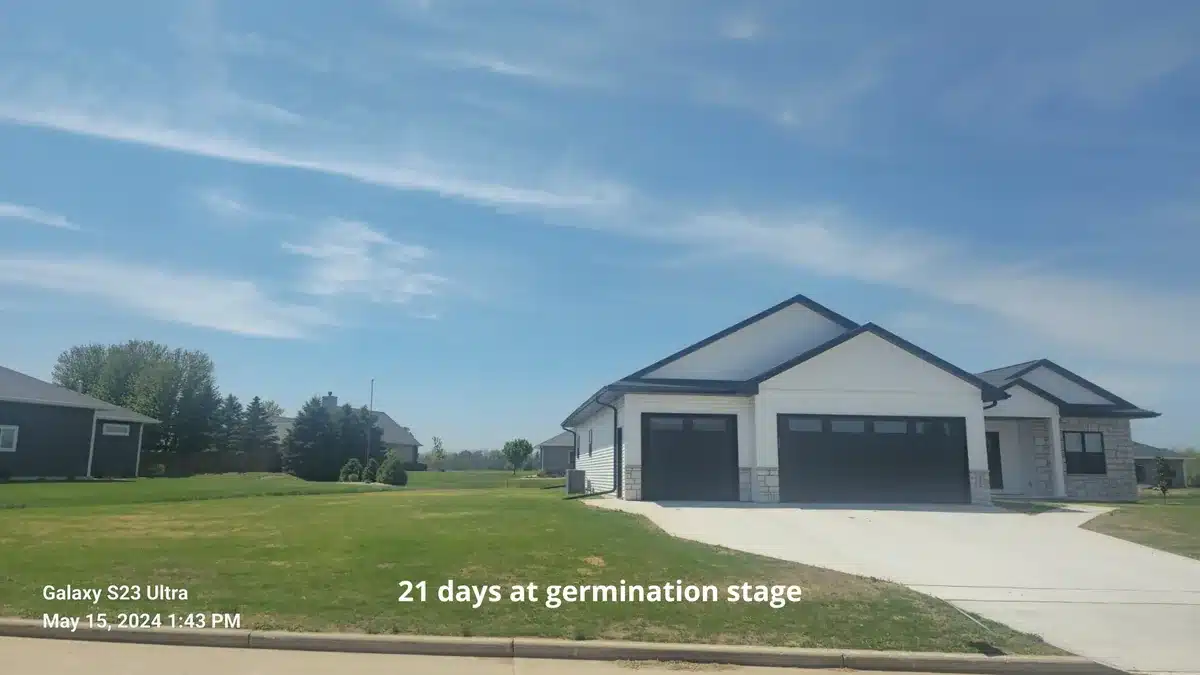
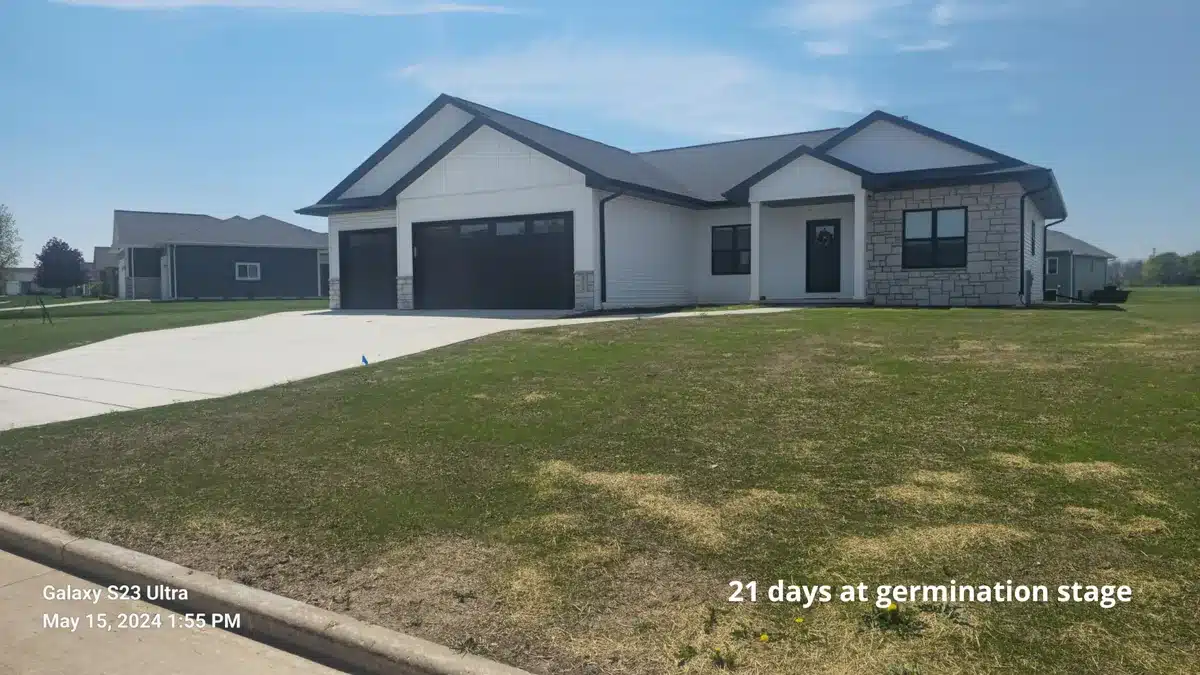
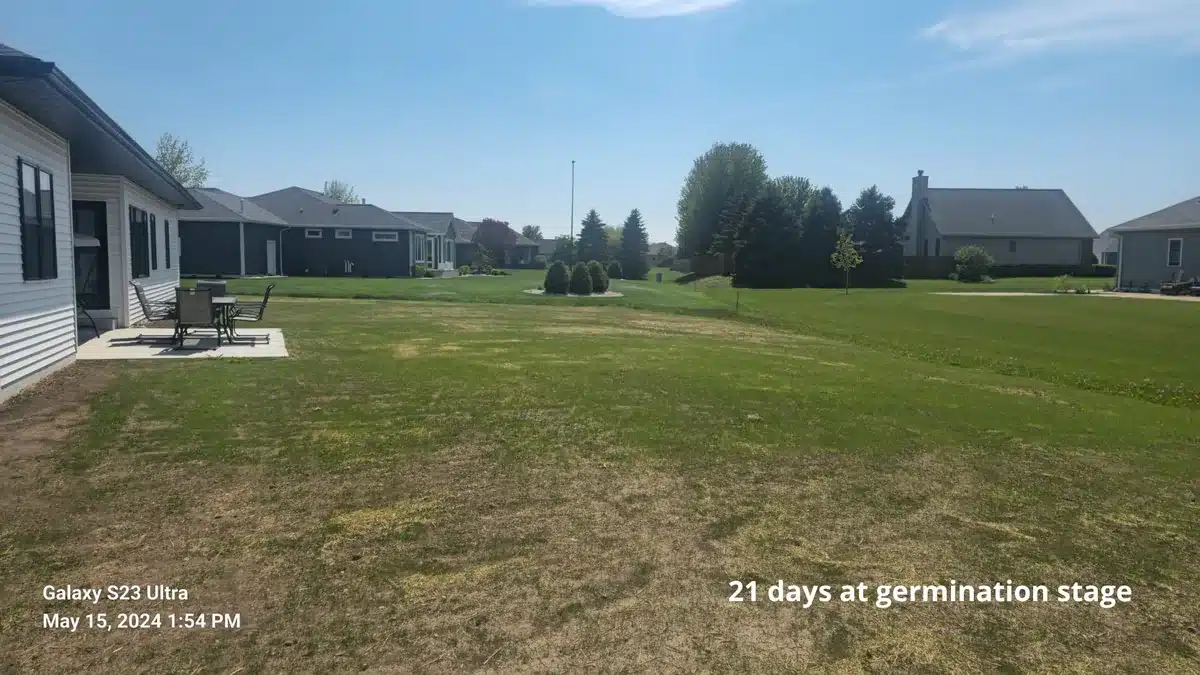
We use Madison Parks Kentucky Bluegrass — a proven variety with a 21-day germination peak rate. Applied evenly using calibrated spreader equipment.
Straw and Tack Application
Loose straw layer bonded with a natural liquid tack adhesive that activates on contact with moisture. Locks straw in place, retains moisture during the critical germination window, breaks down naturally.
Written Watering Plan and Ongoing Support
Before we leave, you get a written watering plan — specific to your lawn, your soil, and your restoration. Exactly what to do. When to do it. How much. And if anything fails to establish, we come back and fix it at no cost.
Restoration Warranty — No Exceptions
If any part of your restoration fails to establish, we come back and fix it. No arguments. No bill. No fine print. This is the only lawn restoration in Manitowoc backed by a written warranty.
What Happens Next
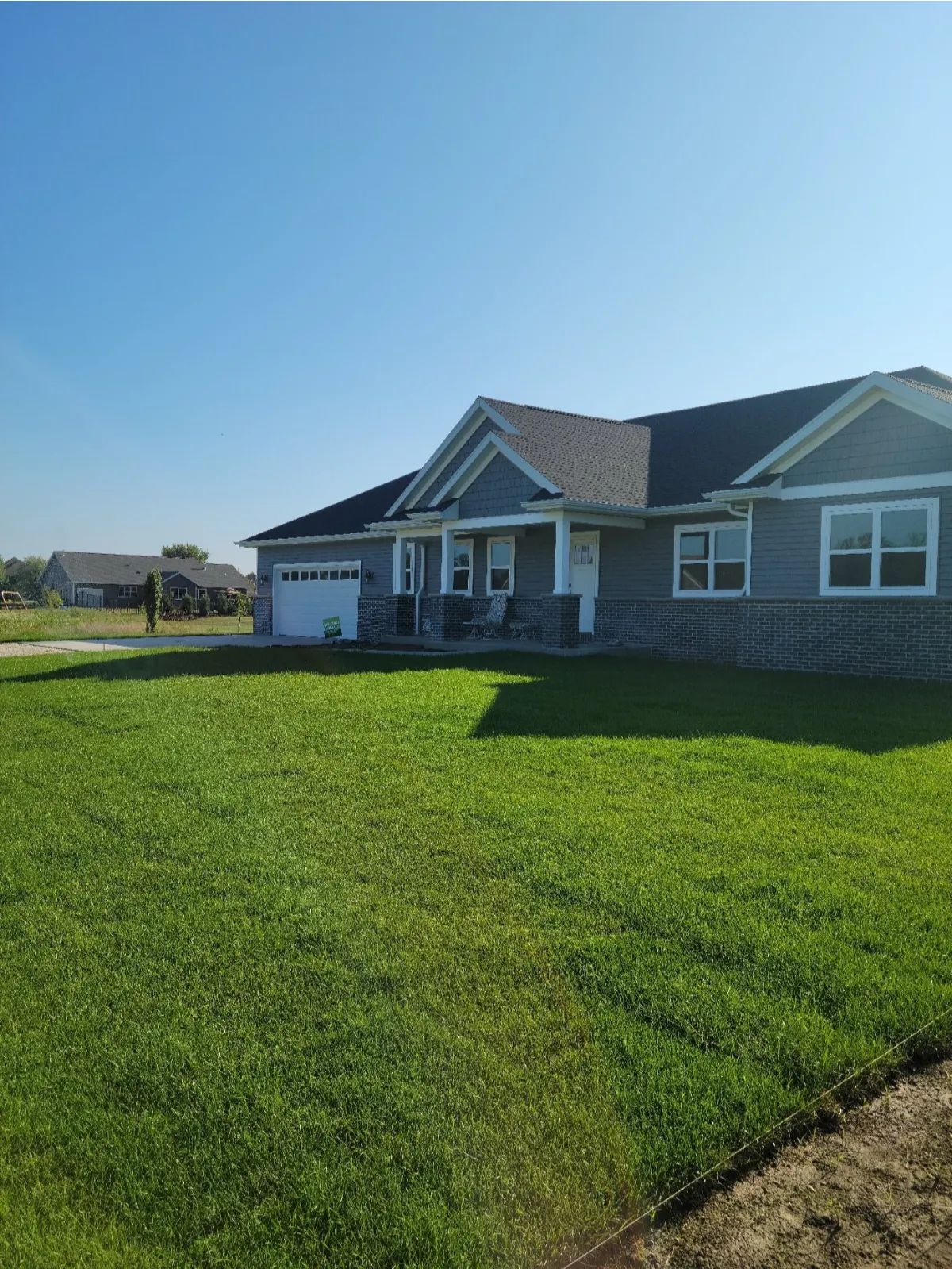
Here's What Your Lawn Looks Like After the Root Restoration Method
- Lawn fully established
- Bare patches gone
- Colour consistent edge to edge
- Mowing properly for the first time in years
- Nobody coming back to re-treat it — because it doesn't need it
Pulling into your driveway and feeling proud of it.
Your kids running barefoot on it.
Hosting without apologizing for the lawn.
Your neighbour asking who did it.
And You'll Never Have to Wonder If It's Going to Last.
It's not held together by chemicals that wear off in six weeks.
Real Results — Before & After
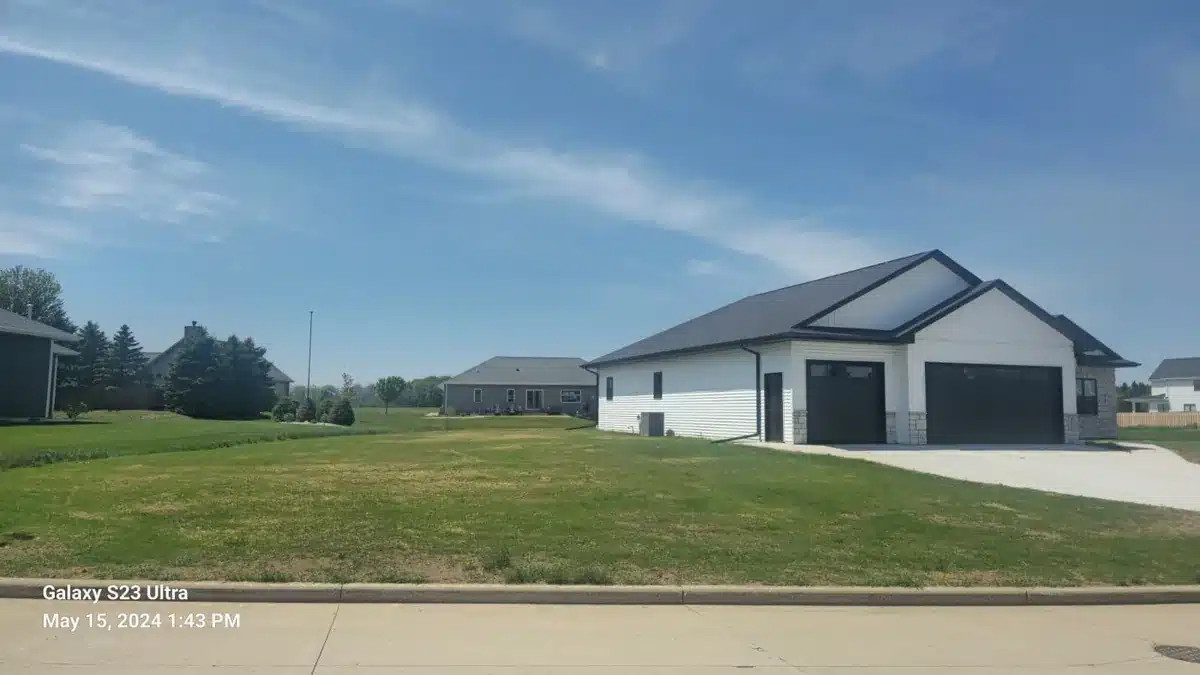
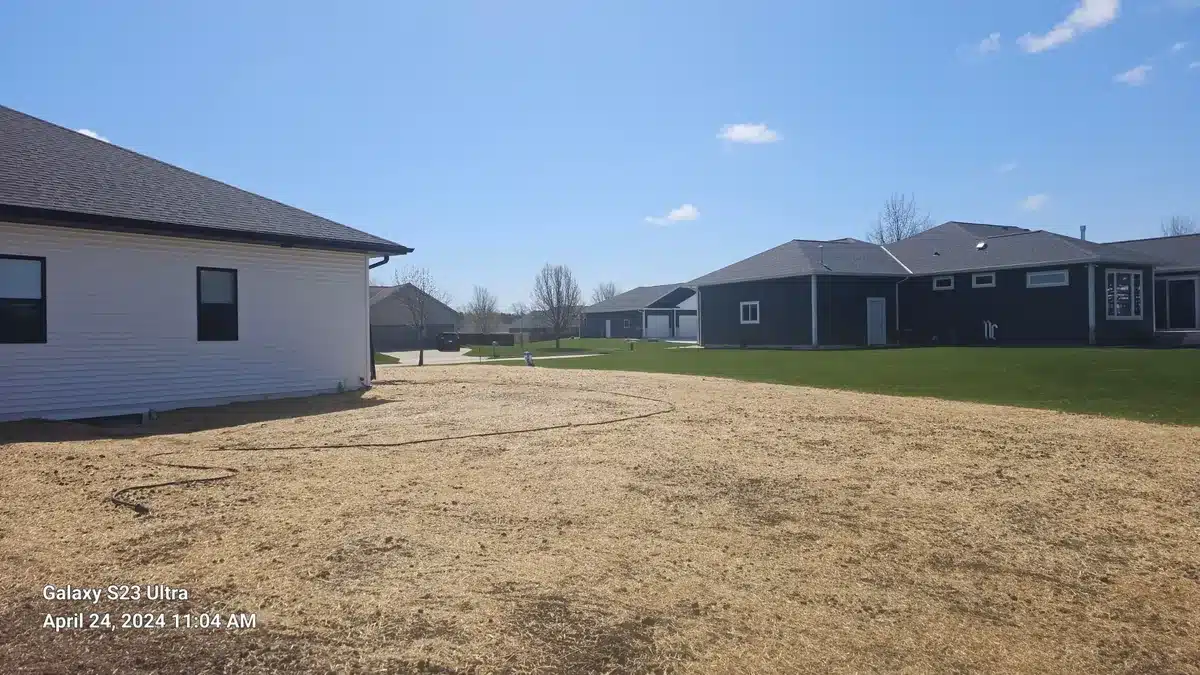
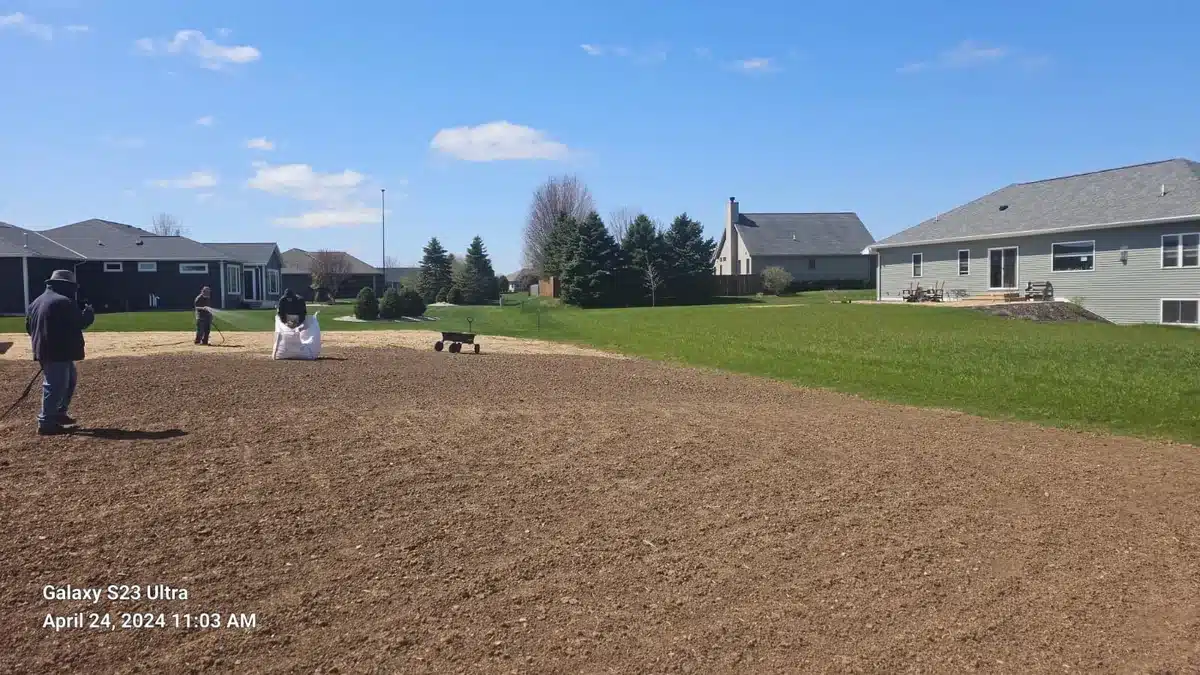
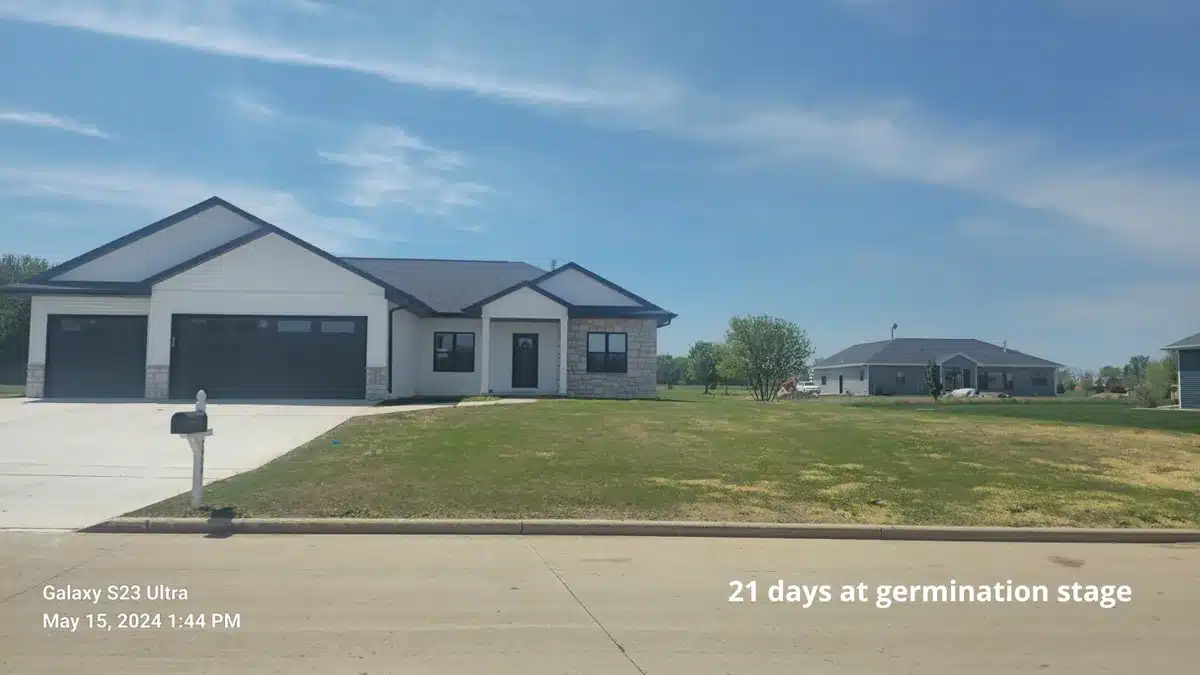
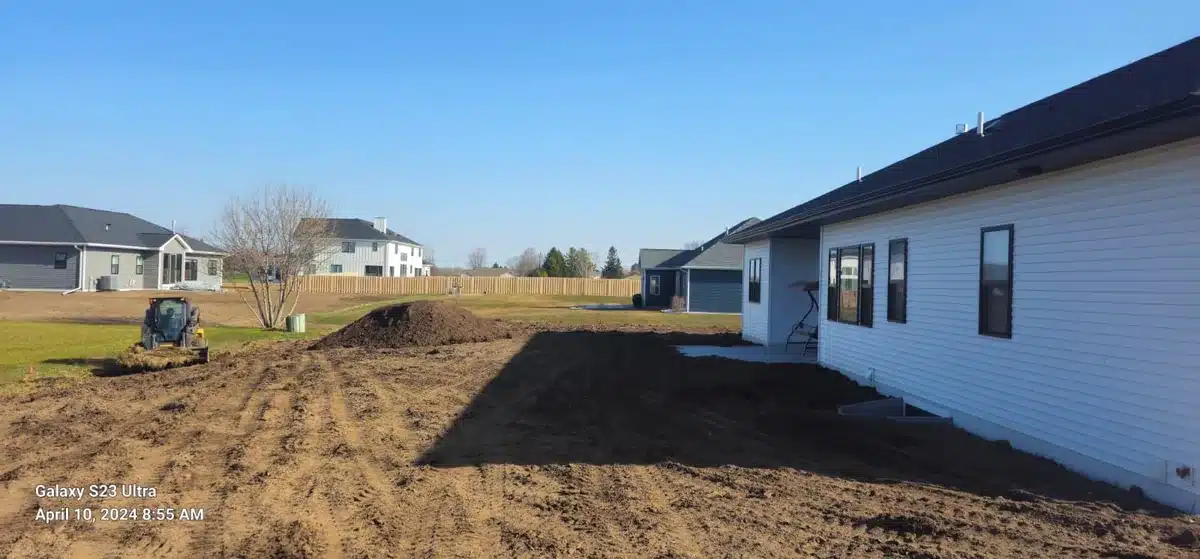
← Swipe or scroll to see more →
Real Results
Don't Take Our Word for It — Here's What Manitowoc Homeowners Are Saying
These are real customers who came to us after years of treatments that didn't work.
"Three years of TruGreen and my lawn was getting worse every season. One restoration with Fast Grass and it's the best it's looked in a decade. Wish I found them sooner."
— Mike H., Manitowoc
"Jeremy was upfront about what it would take and what to expect. Showed up when he said he would. The watering plan made all the difference. Six weeks later, couldn't be happier."
— Sarah K., Manitowoc
"Tried seeding it myself twice, tried two other companies. Bare patches just came back every time. Fast Grass explained the thatch thing and it finally made sense why nothing was working."
— Tom R., Two Rivers
"They do the work themselves, they communicate well, and they stand behind it. Had a small section that was slow to come in and they were back out within a week to fix it. No questions asked."
— Jeff S., Manitowoc
"First company to actually explain why my lawn kept failing instead of just selling me another treatment. I appreciated the honesty. The results backed it up completely."
— Dan M., Manitowoc
Who This Is For
We're Not the Right Fit for Everyone — Here's Who We Work With
Right Fit
- Done throwing money at treatments that don't fix anything
- Want a proper restoration — not another band-aid
- Ready to follow a watering plan during establishment
- Making an investment in property, not buying cheapest quote in town
- Want a company that shows up, does the work, backs it with a warranty
Wrong Fit
- Looking for the lowest price regardless of result
- Applied pre-emergent herbicides in the last 6 months
- Expecting overnight results
- Want a quick fix that looks good for a few weeks
Why Not Wait
Every Season You Wait Makes It Harder to Fix
The longer thatch sits there — compacting, building up, blocking nutrients — the more damage it does to the soil underneath.
The average homeowner spends $500–$1,500 per year on treatments that aren't addressing the root cause. That's $5,000–$15,000 over a decade — for a lawn that looks exactly the same.
At some point you have to decide whether you're going to keep treating symptoms or fix the actual problem.
Book My Free Assessment →Free Lawn Assessment
Here's Exactly What You Get When You Book Your Free Quote
At the Assessment
- Assess full extent of thatch buildup
- Identify exactly why previous treatments haven't worked
- Tell you honestly what your lawn needs
- Answer every question about process, timeline, expectations
- Clear itemised quote — no hidden costs, no pressure
You'll Leave Knowing
- Exactly what's wrong and why
- Exactly what it's going to take to fix it
- Exactly what it's going to cost
- Whether Fast Grass is the right fit
"No vague answers. No pushy sales pitch. No obligation to go ahead. Just complete clarity on where your lawn stands. That's worth $197 on its own. It's yours free."
We respond same day.FAQ